Why You Wake Up Exhausted Even After 8 Hours in Bed
The hidden culprit of pre-bed doomscrolling: how optical blue light and cognitive arousal crush slow-wave sleep architecture, and how to fix it.
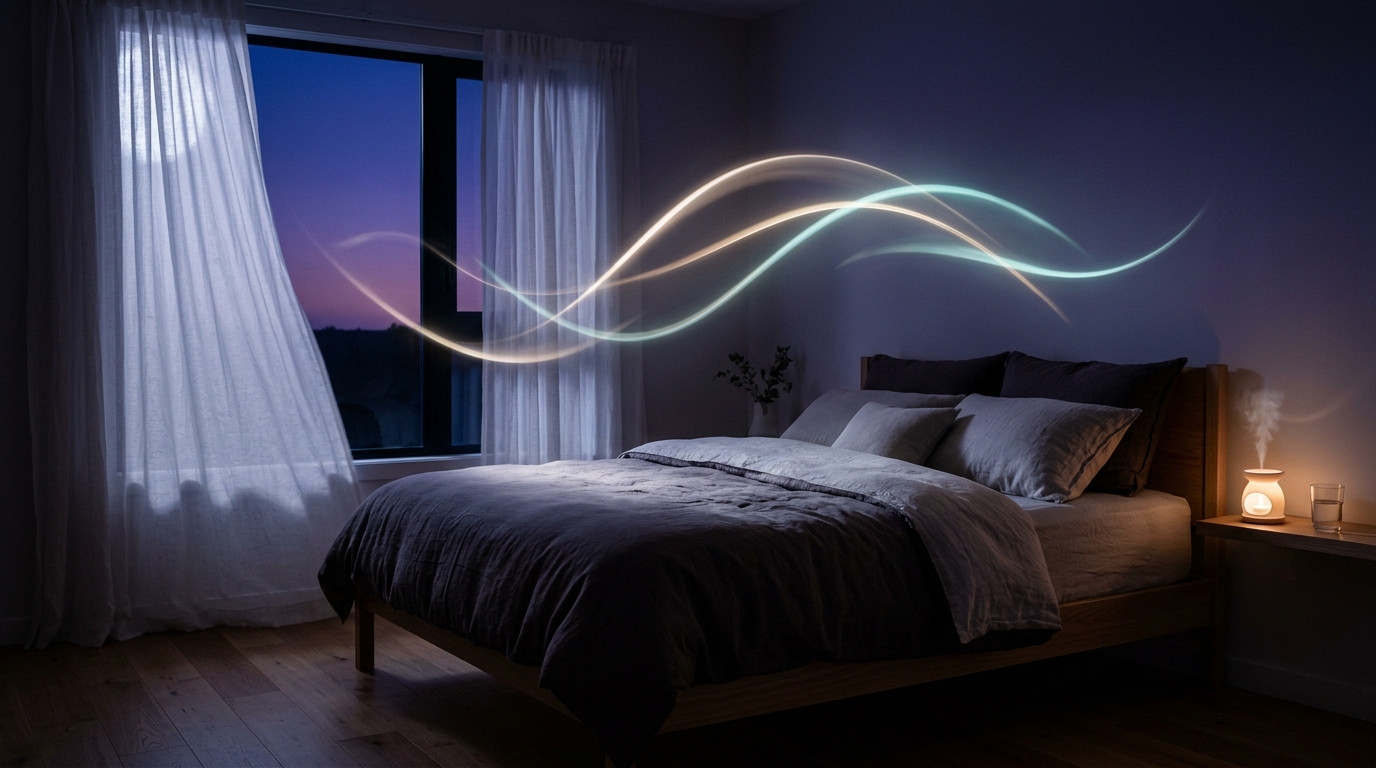
You went to bed at 11:00 PM and woke up at 7:00 AM. That is eight full hours on the clock.
Yet when your alarm sounds, your limbs feel like lead, your head is encased in thick brain fog, and you need three cups of dark roast just to become cognitively functional.
You assume you have a thyroid issue, a vitamin deficiency, or that you are simply 'not a morning person.'
The true culprit is far more invisible: fragmented sleep architecture. You spent eight hours in bed, but your brain was deprived of the restorative, slow-wave stages of true biological recovery.
Sleep Quantity vs. Sleep Architecture
Sleep is not a uniform block of unconsciousness; it is an orchestrated biological ballet composed of 90-minute ultradian cycles. Within each cycle, two stages perform critical physiological maintenance:
- Slow-Wave Deep Sleep (Stage 3 NREM): The body repairs muscle tissue, releases human growth hormone, and activates the glymphatic system—a specialized plumbing network that washes beta-amyloid and metabolic waste from the brain.
- REM Sleep: The brain processes emotional memory, consolidates learning, and integrates complex problem-solving neural connections.
When you spend the 45 minutes before sleep staring into a glowing smartphone:
- Melatonin is Delayed: Pineal gland secretion is delayed by 90 to 180 minutes.
- Core Body Temperature Stays High: The drop in core temperature required for Stage 3 deep sleep is prevented.
- Micro-Arousal Fragmentation: Even if you lose consciousness, nocturnal heart rate variability (HRV) drops and the brain experiences micro-awakenings, crushing your deep sleep quota by up to 50%.
`
Screen-Free Night: [Normal Melatonin] ──> [Core Temp Drops] ──> [90-120 Min Deep Slow-Wave Sleep]
Doomscrolling Night: [460nm Blue Photons] ──> [Nocturnal Cortisol] ──> [Fragmented Shallow Sleep]
`
The Morning Cost of Architectural Sleep Loss
| Biomarker | Screen-Free Evening | Late-Night Smartphone Use |
|---|---|---|
| Deep Slow-Wave Sleep | 80–120 minutes | 30–45 minutes |
| Glymphatic Waste Clearance | Complete cellular detox | Incomplete; residual metabolic debris |
| Morning Cortisol Peak | Sharp, natural alertness | Blunt, sluggish awakening response |
| Caffeine Reliance | Zero to minimal | Mandatory survival mechanism |
How to Restore True Sleep Architecture
1. Enforce the 60-Minute Optical Curfew
Turn off all backlit OLED and LED displays 60 minutes before your target bedtime. Shift to warm, low-lux incandescent lighting (amber lamps or candles).
2. Move Charging Stations Outside the Bedroom
If your phone is plugged in next to your bed, your subconscious remains on low-grade alert. Plug your device into the hallway or kitchen and buy an analog alarm clock.
3. Automate Your Evening Boundary with FocusWell
When fatigue sets in, the prefrontal cortex cannot fight algorithmic hooks. FocusWell provides an external biological safety net:
- Automated Focus Schedules: Lock down social and communicative apps automatically starting at 9:30 PM.
- Open Limits: Cap daily launches so late-night habit loops cannot be triggered. You fall asleep naturally, allowing your brain to enter the deep slow-wave recovery you desperately need.
Ready to break the compulsive scroll cycle?
Reclaim restorative slow-wave sleep. Download FocusWell and automate bedtime app locks.
Free 3-Day Trial•100% On-Device & Private•Native Apple Screen Time

Founder & Maker of FocusWell
Founder of FocusWell. Designing software systems to protect human circadian biology and restorative sleep.